
Table of Contents
- The Biggest Misunderstanding About Vape Blind Boxes
- Blind Boxes Are Not a Gimmick — They’re a Relationship Model
- Why Most Vape Blind Boxes Fail
- The Real Formula Behind Sustainable Blind Boxes
- Designing a Blind Box That Users Don’t Regret Buying
- From “Blind Box” to Monthly Habit
- Small Adjustments That Dramatically Improve Retention
- Blind Boxes + Subscriptions: Adding Time Into the Business
- Why This Model Still Works in Today’s Vape Market
1. The Biggest Misunderstanding About Vape Blind Boxes
When most people hear “vape blind box,” their first reaction is usually the same:
Just another gimmick. A quick way to clear inventory and cash out.

That assumption isn’t entirely wrong — because many blind boxes are built that way.
But the blind boxes that actually survive long-term are based on a very different idea.
Successful blind boxes are not marketing tricks.
They are honest business structures designed with one core principle:
Repeat purchases are built into the system from day one.
You’re not selling a box of vapes.
You’re selling a relationship that happens once every month.
2. Blind Boxes Are Not a Gimmick — They’re a Relationship Model
Vape products already have natural stickiness.
Blind boxes add one more layer: controlled uncertainty.
When these two elements overlap, something interesting happens.
Users don’t ask themselves “Should I buy again?”
They start thinking:
“It’s probably time for my box this month.”
At that point, you’re no longer chasing repeat purchases.
The customer’s consumption rhythm has already been set — by you.
That’s the real power of blind boxes.
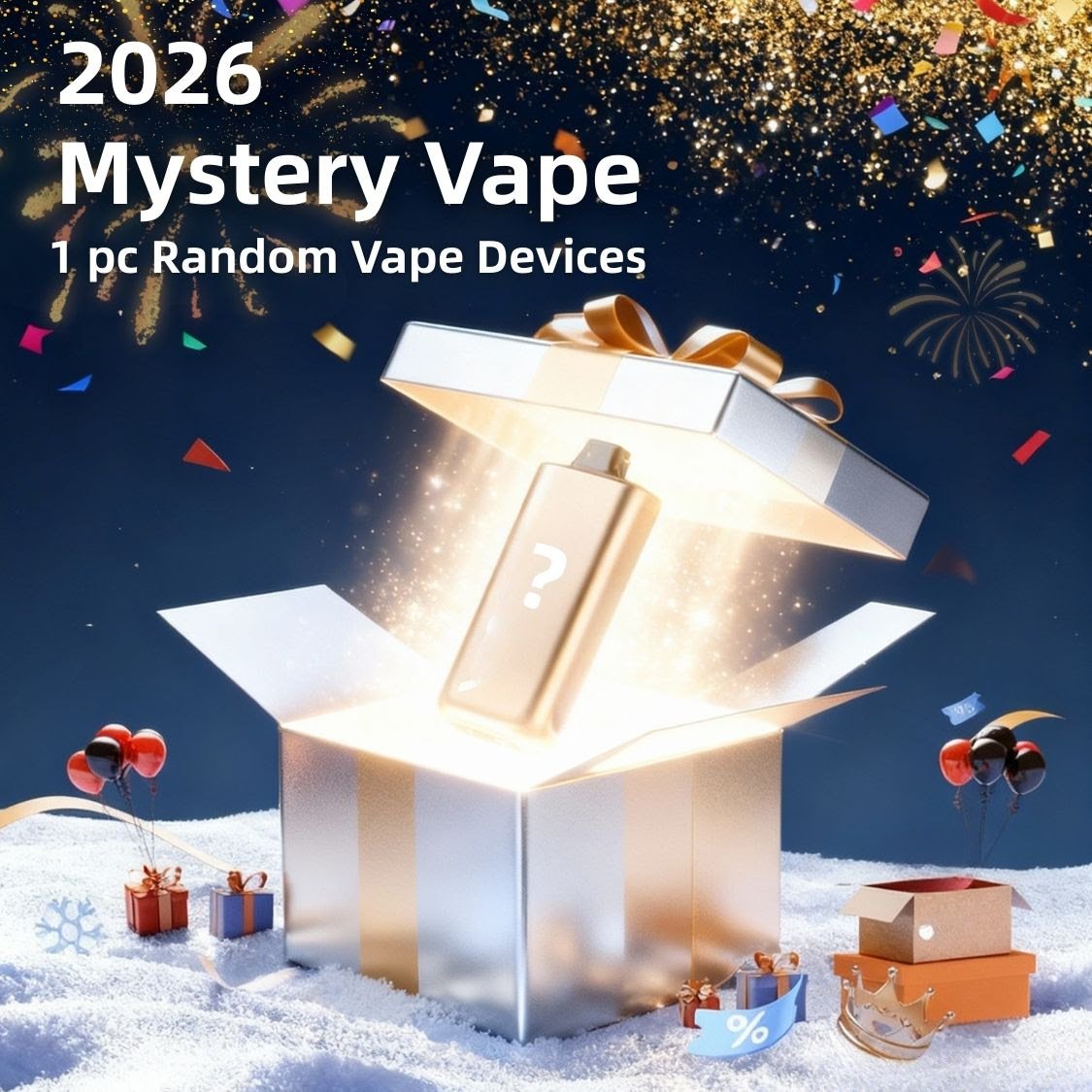
✨ 2026 Vape Mystery Box Only $13.66
3. Why Most Vape Blind Boxes Fail
I’ve seen many sellers fail with vape blind boxes, and the reason is almost always the same.
They don’t think about retention.
They only think about clearing dead stock quickly.
One seller once complained to me that blind boxes had “terrible repeat rates.”
I asked to see his product configuration.
More than half of the box was made up of:
- The cheapest flavors
- The slowest-moving SKUs
- Almost no bestsellers
- Very few new or interesting flavors
From the customer’s perspective, the message was obvious:
“This isn’t a surprise box. This is inventory cleanup.”
Once the first box is opened, the relationship ends.
4. The Real Formula Behind Sustainable Blind Boxes
Blind boxes that last follow the opposite logic.
They are not random. They are designed.
Sellers who run stable blind box programs usually follow a simple internal formula:
1) The Core Must Be “Safe Choices”
These are the flavors that:
- Sell consistently
- Have high repeat purchase rates
- Rarely trigger complaints
They should make up the largest portion of the box.
The goal is simple:
When the user opens the box, regret must be impossible.
2) Add Controlled Newness
Every box should include one or two flavors that feel:
- New
- Slightly unfamiliar
- Worth trying
They don’t need to be expensive.
They just need to feel like discovery.
3) Inventory Items Stay at the Edges
Yes, you can include slow-moving inventory.
But the proportion must be low enough that it barely stands out.
Its job is not to generate profit.
Its job is to disappear quietly over time.
5. Designing a Blind Box That Users Don’t Regret Buying
Pricing doesn’t need to be aggressive.
You don’t need deep discounts.
A small saving compared to individual purchases is enough.
The customer logic is very simple:
“I’m going to buy vapes every month anyway.
I might as well fix it and save a little.”
At that moment, the blind box stops being a promotion.
It becomes a default decision.
6. From “Blind Box” to Monthly Habit
One of the most stable examples I’ve seen didn’t use complex mechanics at all.
The seller simply launched a “Monthly Box”:
- One box per month
- Conservative flavor selection
- Bestsellers first
- New flavors as accents
- Minimal inventory stock
Growth was slow for the first two months.
But by the third month, repeat purchases started stacking naturally.
What were users talking about?
Not price.
They talked about flavors:
- “This month’s mint was solid.”
- “Last month’s grape wasn’t for me.”
That’s when you know you’re no longer just selling products.
7. Small Adjustments That Dramatically Improve Retention
Later, the seller made one small change.
Before shipping, existing users could select a preference direction, such as:
- Cooling / Menthol
- Fruity
- Strong throat hit
That single option significantly reduced cancellations.
Why?
Because users felt:
“This box was prepared for me.”
Personalization doesn’t need to be complex.
It just needs to be felt.
8. Blind Boxes + Subscriptions: Adding Time Into the Business
At this point, you’re no longer selling items.
You’re building stability.
Most vape sellers focus on:
- “Can I get orders today?”
Long-term sellers focus on:
- “Will this money come back next month?”
- “And the month after that?”
Blind boxes and subscriptions add time into the business model.
Once time is included:
- Inventory planning becomes easier
- Profit calculations become clearer
- Risk drops significantly
You stop gambling on traffic spikes.
You start running a predictable system.
9. Why This Model Still Works in Today’s Vape Market
The real strength of vape blind boxes is not in the packaging.
Not in clever copywriting.
Not in hype.
It solves one of the most practical problems in today’s market:
How to get users to come back — without constantly pushing them.
At the end of the day, you’re not just selling vapes.
You’re selling a habit that quietly fits into someone’s monthly routine.
And that’s why, even in a tougher environment,
blind boxes that are designed for relationships can still run — and run for a long time.